What Is the Silent Treatment?
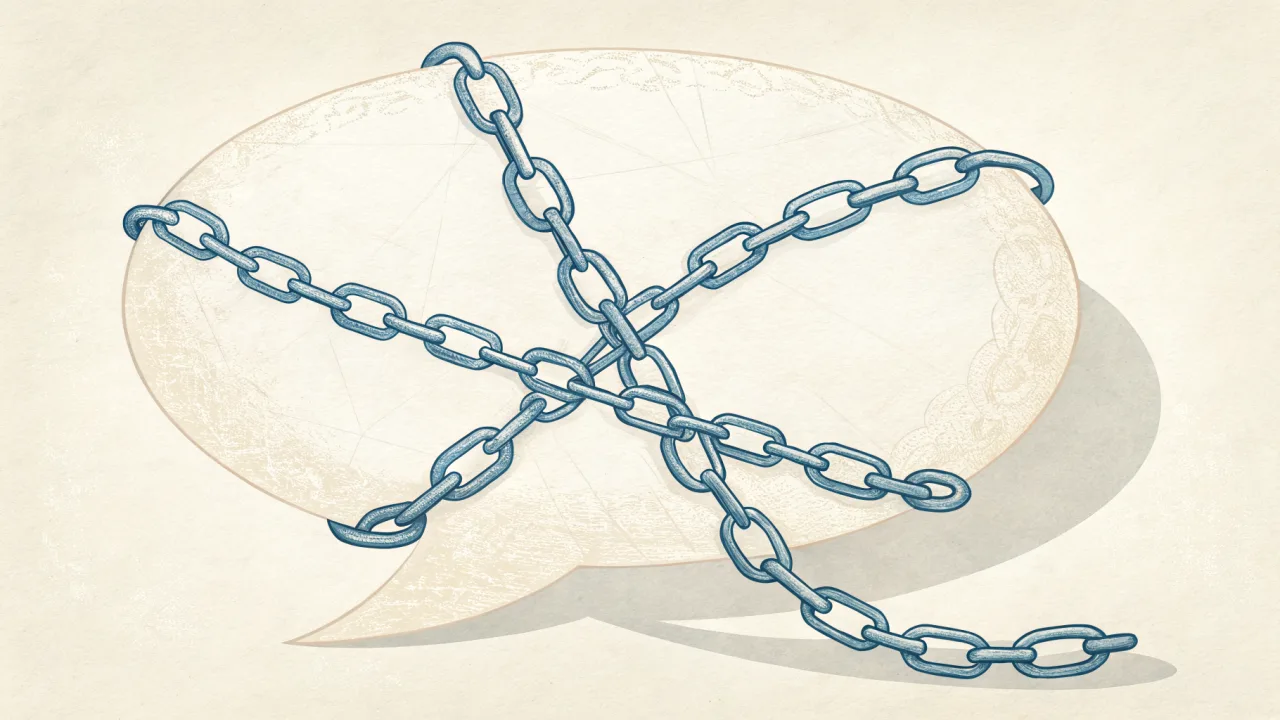
Silent treatment is the refusal to communicate with someone who is trying to engage. It ranges from a brief sulk after a disagreement to a sustained, deliberate withdrawal that can last days or weeks. The person giving it typically knows you are waiting — that is part of the mechanism.
It is not always malicious. Some people withdraw because they feel overwhelmed or genuinely lack the language for what they are feeling. But when silence becomes a repeated instrument — something deployed to punish, control, or destabilize — it crosses into emotional abuse territory. Cleveland Clinic classifies it as an unhealthy relationship behavior when used deliberately to dominate.
How the silent treatment differs from a cooling-off period
A healthy pause during conflict has a clear intention and a stated endpoint. "I need an hour to calm down and then I want to talk" is different from disappearing. The silent treatment has no declared end date. Its purpose is to keep you uncertain — scanning, waiting, adjusting.
What happens in the brain when you're being ignored
When someone is ignored, the brain registers it as a social threat on par with physical pain. Research cited by relationship therapist Abby Medcalf shows that the silent treatment creates measurable physiological stress: cortisol rises, and the nervous system shifts into hypervigilance — the state of constantly scanning for what you might have done wrong, and what will make it stop.
Why People Use the Silent Treatment
Understanding the motivation helps you decide how to respond — and whether you are dealing with someone who is overwhelmed or someone who has learned that silence is a reliable lever.
- Avoidance of conflict: Some people freeze when hard conversations arrive. Silence is a way to exit the field without formally leaving.
- Punishment and control: Used deliberately to generate anxiety and compliance. The message is: you have done something wrong and you will not find out what until I decide.
- Lack of emotional regulation: The person is flooded and cannot speak. This is different from the above — it is shutdown, not strategy.
- Learned family pattern: Some people grew up in homes where silence was the default response to conflict. It is all they know.
When it becomes emotional abuse
The American Psychological Association and clinicians at Cleveland Clinic classify repeated silent treatment as a form of psychological abuse. It erodes self-esteem and creates long-term trust issues, particularly when it is used alongside denial — making the recipient question whether the silence is even happening.
When it is not abuse
A person who asks for space and returns to talk is not giving the silent treatment. The key distinction is intent: withdrawal with the eventual goal of reconnection is different from withdrawal as punishment.
How to Respond to Silent Treatment: 8 Strategies
These are practical, sequenced responses — not scripts. Adapt them to the relationship and how long the silence has been going on.
1. Pause and reset your nervous system first
Before doing anything else, take a moment to bring your cortisol down. The Double-Inhale with Long Exhale technique described by Abby Medcalf is simple and portable: breathe in twice through the nose — a short inhale followed by a top-up — then exhale slowly through the mouth. Do this three or four times.
Why this matters: decisions made from a flooded nervous system tend to make the situation worse. Begging, threatening, counter-silence — these are all products of a system that is not calm. The pause is the strategy.
2. Name the behavior without accusation
The clearest response to silence is naming it. Something like: "I've noticed you're not responding. I want to understand what's going on. When you're ready to talk, I'm here." This puts the dynamic into language without assigning blame — it moves the interaction from a power contest to an open question.
Research from PositivePsychology.com supports this framing. It keeps the invitation open while making clear that you can see what is happening.
3. Use I-statements to set a boundary
When you are ready to say more, lead with what you feel rather than what they are doing. "I feel anxious and shut out when we go days without talking. I want us to find a way to work through disagreements" is harder to argue with than "You always do this." It also names what you actually need.
4. Give them a graceful way back in
Sometimes the other person is too entrenched or too ashamed to break the silence themselves. A concrete proposal removes the awkwardness of who goes first. "I think we both need some space. Can we talk tomorrow evening?" gives them a door they can walk through without having to admit they were the one who locked it.
5. Stay in your own life
The silent treatment works by making you feel that your routine should stop until the other person speaks. It should not. Keep your plans, your friendships, your schedule. This is not about punishing them — it is about not handing over the keys to your own stability.
6. Write down what you want to say
When you are in the middle of being ignored, thoughts can spiral into self-doubt and worst-case scenarios. Getting them out of your head and onto paper breaks the loop. You do not have to send anything you write. The goal is clarity.
The Brain Dump tool lets you offload what is swirling without committing to a message — it is useful precisely in this kind of situation, when your thoughts are tangled and the silence is making everything louder.
7. Talk it through with a thinking partner
Sitting with this alone tends to amplify it. Talking it through with someone who can hold the context — who knows the history of this dynamic, not just today's episode — changes the quality of your thinking. Annabelle holds context across sessions, which means she can ask the follow-up question your friends have already moved past.
8. Set a hard deadline for yourself
If the silence continues without any acknowledgment, decide in advance what you will do. "If I haven't heard anything by Friday, I'll send one final message saying I'm ready to talk when they are — and then I'll wait for them to come to me." The decision made in advance is easier to hold than one made in the heat of an anxious moment. After that, follow through.
What Not to Do When Someone Ignores You
The most common mistakes during silent treatment are understandable — they all come from the same anxious place. But they tend to reinforce the dynamic rather than resolve it.
- Do not beg or plead. It signals that the silence is working, which trains the behavior. You have now confirmed that going quiet produces the response they wanted.
- Do not counter with silence of your own. Two people not speaking is a standoff, not a solution. It usually extends the timeline without changing anything.
- Do not escalate with threats. "I'm leaving if you don't talk to me right now" tends to feel coercive even when you mean it. If you are serious, say what you mean clearly and once.
- Do not take full responsibility for something you do not own. The silent treatment often has more to do with the giver's avoidance capacity than with whatever triggered it.
Why these reactions tend to backfire
Begging and pleading increase your own anxiety while lowering the perceived cost of the behavior for the other person. Counter-silence just extends the period of disconnection. Threats often give the other person a justification for their withdrawal. None of these resolve the underlying dynamic — they each feed it.
The Impact of Silent Treatment on Your Well-Being
Being ignored is not a minor interpersonal inconvenience. Its physiological and psychological effects are well-documented.
According to Abby Medcalf, the silent treatment creates measurable physiological stress in recipients, including elevated cortisol and a sustained hypervigilance response. Your body registers social exclusion as threat — it is not overreacting.
The cognitive cost
Repeated silent rejection impairs thinking. A study highlighted by the American Enterprise Institute found that imagining lifelong social isolation significantly reduced participants' ability to complete complex cognitive tasks. The toll is not only emotional — it affects how clearly you can think through the situation itself.
Long-term relationship damage
When silent treatment becomes a recurring pattern, it systematically erodes trust and intimacy. The person on the receiving end often becomes more anxious, more careful, more self-censoring over time — adapting to avoid triggering the next silence. That adaptation is its own kind of damage.
Silent Treatment in Relationships vs. at Work
The same behavior shows up across contexts, but the responses need to differ.
In a romantic relationship
Silent treatment between partners is often entangled with long-standing emotional distance and attachment patterns. The strategies in this guide apply — naming the behavior, I-statements, setting a deadline — but if it is a repeating cycle, couples therapy is worth considering. The One Love Foundation offers practical resources for identifying unhealthy relationship patterns.
At work
Workplace silent treatment looks different: being excluded from emails, left off meeting invites, answered in monosyllables by a colleague or manager. Here, the focus should be on professional clarity rather than emotional repair. Ask directly whether there is an issue with your work. Document the pattern. Escalate to HR if it affects your ability to do your job.
| Aspect | Partner | Colleague / Boss |
|---|---|---|
| Emotional stakes | High | Moderate |
| Best first step | Name the behavior gently | Ask directly if something is wrong with your work |
| Third-party support | Therapist or couples counseling | HR or a trusted manager |
| Exit threshold | When the pattern becomes controlling | When it materially affects your work or career |
Tools That Help You Cope with Silent Treatment
Having a private place to process helps. Not because talking about it always changes it, but because carrying the weight of it alone tends to amplify every part of it.
Brain Dump
Get the spiral out of your head. Write or record what is actually there, without editing. The AI helps you see what is signal and what is just noise from the waiting.
Try Brain Dump →Breathing Room
When your nervous system is running on cortisol and worst-case scenarios, sixty seconds of structured breathing changes the physiological baseline. No signup needed.
Try Breathing Room →Draft Text Reality Check
Before you send the message you have been composing in your head for three days, run it here. See how it actually lands before you commit to it.
Try Draft Text Reality Check →| Tool | Best For | Limit |
|---|---|---|
| Journal or notebook | Clearing the mental noise | No feedback, no pattern-recognition across time |
| Breathing exercises | Immediate physiological reset | Does not address the relationship dynamic |
| AI Advisor (e.g., Annabelle) | Untangling the pattern, holding context over time | Not a therapist — for reflection, not clinical care |
| Therapist | Sustained abusive patterns, trauma history | Requires scheduling, cost, availability |
Annabelle remembers what you said last month about this person. She will ask the question you are avoiding. That is the part that is actually useful when you are sitting with silence for the fourth time this year.
If the silent treatment has become a sustained pattern — if you feel anxious or depleted by it in ways that are affecting your daily life — the right support is a licensed therapist who can work through the underlying dynamics with you. In the US, you can reach the 988 Suicide and Crisis Lifeline by calling or texting 988 any time. In the UK, the Samaritans are available on 116 123.
Frequently Asked Questions
-
What is the silent treatment considered in psychology?
Psychologists classify repeated silent treatment as a form of emotional and psychological abuse when it is used deliberately to control or punish. Cleveland Clinic notes that it damages self-worth and creates long-term trust problems. Occasional withdrawal during heightened conflict is different — the key is intent and repetition.
-
How do you respond to silent treatment without escalating?
Name what you observe with an I-statement: "I've noticed we haven't been talking. I feel cut off and I want to understand what's going on." Avoid accusation. Give them a concrete time to reconnect. Then stay in your own life rather than waiting at the door.
-
Does the silent treatment count as gaslighting?
It can be part of gaslighting when the person later denies ignoring you — "I wasn't giving you the silent treatment, you're imagining things." Gaslighting involves making the other person question their own perception of reality. Silent treatment combined with denial is a classic manifestation of that pattern.
-
How do you respond to silent treatment from a narcissist?
Set a clear limit on your waiting and hold to it. Narcissistic silent treatment is often designed to generate a chasing response — the more you pursue, the more effective it becomes. One clear message stating you are ready to talk when they are. Then stop pursuing. What that costs you is less than what continued chasing costs you.
-
Can the silent treatment ever be a healthy response?
Not as a sustained pattern. A stated time-out — "I need an hour before I can talk about this" — is healthy and different. What makes silent treatment unhealthy is the absence of an endpoint and the intention to keep the other person uncertain.
-
What should I do if the silent treatment has gone on for weeks?
Weeks is a serious signal. Send one clear message: "I want to resolve this. I'm here to talk when you're ready. If I don't hear from you by [specific date], I'll have to assume the relationship is over for now." Then follow through on what you said. Weeks of silence without any acknowledgment of a relationship is its own kind of answer.
-
How do you respond to silent treatment in a friendship?
Send one message saying you miss them and want to understand if something happened. If they continue to not respond, that is information. Friendships are not obligated to survive indefinitely — and one that requires you to pursue silence while receiving nothing in return is taking more than it is giving.
-
When should I seek professional help because of silent treatment?
When it is becoming a recurring pattern in a significant relationship and you are noticing changes in your own behavior — walking on eggshells, second-guessing yourself, feeling persistently anxious. A therapist can help you see the pattern clearly and decide what you want to do with that clarity. Rula is one platform that matches people with therapists who specialize in relationship dynamics.